Why Broker Groupings Beat Private Equity Consolidation
The insurance brokerage industry is at a crossroads. Private equity firms now drive over 60% of broker M&A activity in Europe, and the number of independent brokers is shrinking fast. For many broker-owners, the pitch sounds familiar: sell your business, take the payout, and let the consolidator run the show. But what if there is a smarter path — one that lets brokers stay independent, keep doing what they love, and still access the scale and technology they need to compete?
This week, Netfonds AG and blau direkt announced a landmark strategic alliance under Warburg Pincus, and we at Ovio want to congratulate both companies on this bold move. It is exactly the kind of deal that proves broker groupings and technology-driven partnerships can reshape the industry — without forcing brokers to give up their independence.
What the Netfonds–blau direkt Alliance Means
The deal brings together Netfonds, with its deep investment expertise and finfire platform, and blau direkt, a leader in insurance automation. Combined, they form a powerhouse with over EUR 550 million in revenue and 600 employees. Critically, both companies will continue to operate as independent entities, retaining their brands, cultures, and leadership teams.
As blau direkt CEO Ait Voncke put it, the goal is to jointly define "the operating system of the industry" — with a particular focus on AI applications. This is not a hostile takeover or a strip-and-flip PE deal. It is two companies choosing to pool their strengths, share technology, and serve brokers better — together.
This is the model we believe in at Ovio. Congratulations to Martin Steinmeyer and the entire Netfonds team, and to Ait Voncke and everyone at blau direkt. This alliance sets an example for the entire European insurance industry.
The Problem with Private Equity Consolidation
Private equity has poured billions into insurance brokerage over the past decade. The appeal is clear: recurring revenue, predictable cash flows, and fragmented markets ripe for roll-up. But the consequences for brokers on the ground are often less attractive.
When a PE firm acquires a brokerage, the focus shifts to EBITDA margins, cost-cutting, and preparing for a profitable exit within three to five years. Client relationships built over decades become line items on a spreadsheet. The entrepreneurial broker who built the business often finds themselves reporting to corporate managers who have never sold a policy.
In the UK, where consolidation is most advanced, the number of independent brokers has declined sharply. The same pattern is now accelerating across Germany, the Netherlands, Belgium, and France. PE-backed buyers like GGW Group, MRH Trowe, and international players such as Howden and Ardonagh are actively acquiring across continental Europe.
For brokers who got into this business because they love advising clients, building relationships, and running their own shop, selling to PE often means losing exactly what made the work meaningful.
Broker Groupings: The Third Way
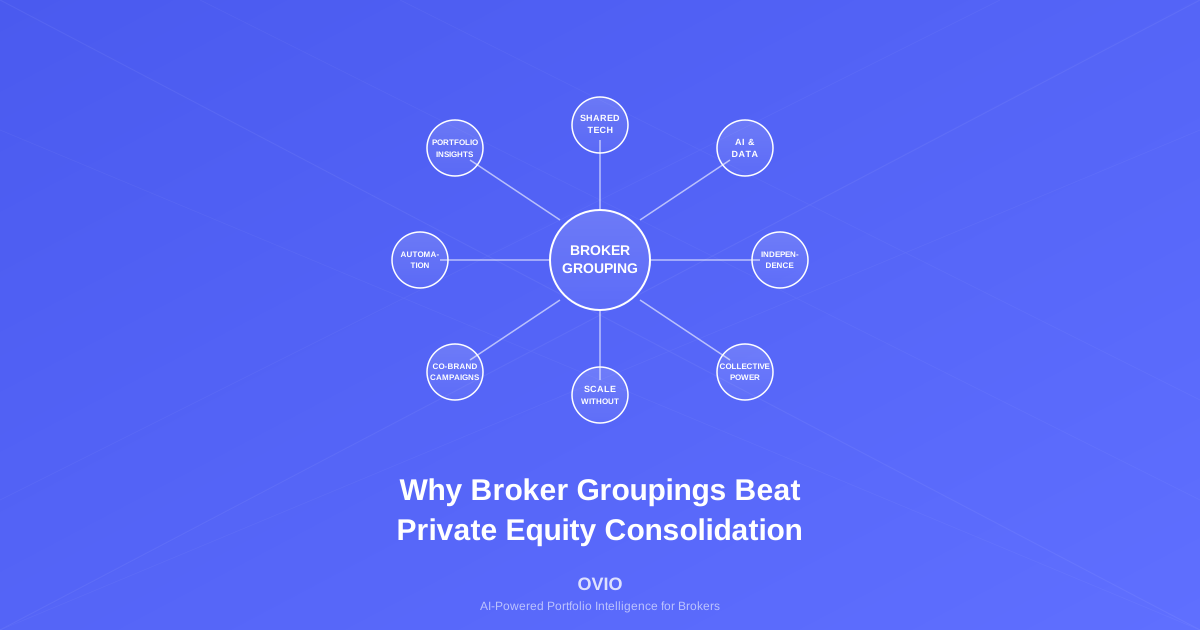
Between full independence and full acquisition, there is a third path: broker groupings, pools, and technology-driven alliances. These structures allow brokers to maintain ownership and autonomy while gaining access to shared technology platforms, collective bargaining power with insurers, shared marketing and campaign resources, data analytics and AI-driven insights, and professional back-office support.
Networks like Trust Risk Control, Unison Steadfast, and others have already proven that independent brokers can compete internationally through collaboration rather than consolidation. The Netfonds–blau direkt alliance takes this concept further by adding a deep technology layer — creating what is essentially a shared infrastructure platform for the broker of the future.
This model is gaining traction beyond Germany. In the Netherlands, Belgium, and France, broker pools are emerging as serious alternatives for owners who want scale without sacrifice. We expect this trend to accelerate across Europe and beyond in the coming years.
Technology Makes Groupings Powerful
What makes modern broker groupings different from traditional networks is technology. With the right platform, a group of 50 independent brokers can operate with the efficiency and data capabilities of a large consolidated firm — while each broker retains full ownership and client relationships.
This is exactly where Ovio fits in. Our AI-powered platform helps brokers analyze portfolio data to find cross-sell and upsell opportunities, generate smart client lists based on renewals, churn risks, and prospects, calculate portfolio health scores, launch targeted campaigns from data-driven insights, and automate follow-ups and workflows. When combined with the infrastructure of a broker grouping, these capabilities multiply. Insurers can reach millions of end-customers through broker networks. Brokers and insurers can collaborate on co-branded campaigns. And every broker in the group benefits from the collective intelligence of the network.
Technology is the equalizer. It allows groupings to deliver the scale advantages that PE firms promise — without the loss of independence.
A Vision for the Future
We believe the future of insurance distribution belongs to technology-enabled broker groupings. Not because consolidation is inherently bad, but because most brokers did not start their business to become employees of a holding company.
The Netfonds–blau direkt alliance is a proof point. It shows that you can achieve scale, invest in AI, and build world-class technology infrastructure — all while preserving the entrepreneurial spirit and client-first culture that makes independent brokers great.
This model will expand beyond Germany. We see it coming to the Netherlands, Belgium, France, and eventually across Europe and into new markets. Ovio is proud to support this vision with technology that turns static portfolio data into actionable growth workflows — for individual brokers and for entire groupings alike.
Key Takeaways
- The Netfonds–blau direkt alliance under Warburg Pincus creates a EUR 550M+ technology platform for brokers while preserving independence
- Private equity consolidation is not the only option — broker groupings offer scale without sacrifice
- Technology and AI are the key enablers that make modern groupings competitive with consolidated firms
- This model is expanding across Europe and will reshape how independent brokers compete
Conclusion
To Netfonds and blau direkt: congratulations on a deal that points the way forward for the entire industry. To every independent broker weighing their options: you do not have to choose between staying small and selling out. Technology-driven groupings offer a third path — one where you keep your independence, grow your business, and access the tools you need to thrive.
At Ovio, we are building the technology that makes this vision real. If you want to see how AI-powered portfolio intelligence can help your brokerage or your broker grouping grow, get in touch with us today.